Invited Speakers
We are excited to announce the Invited Speakers for ACM EAAMO ‘26. All sessions take place at the main building of LMU Munich; see the program at a glance for the full schedule.
Moritz Hardt #
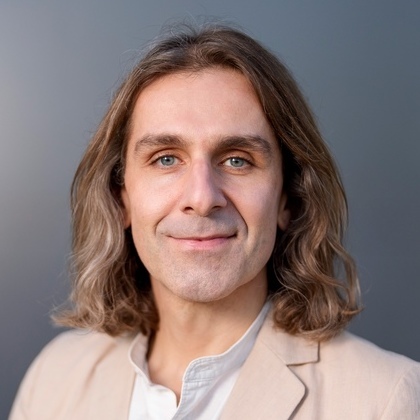
Max Planck Institute for Intelligent Systems, Tübingen, Germany
Keynote 1: Thursday, November 5, 17:00–18:00
Morgenstern’s Prophecy and the Future of Prediction #
Abstract: A century ago, economist Oskar Morgenstern conjectured that predicting the social world would be largely impossible for a fundamental reason: predictions change the very reality they seek to anticipate, a phenomenon we now call performativity. Recent advances in performative prediction challenge Morgenstern’s prophecy, but stop short of refuting it. Existing theory largely rests on the assumption that predictions have only a small influence on outcomes. But what if they don’t? A new principle overcomes this limitation. Repeated model training and deployment recover stable signals in the system, even under arbitrarily large performative effects. The stable signals principle sheds light on what to expect from powerful feedback loops on digital platforms and in training large language models.
Biography: Moritz Hardt is a director at the Max Planck Institute for Intelligent Systems, an honorary professor at the University of Tübingen, and co-founder of grubel. Prior to joining the institute, he was an associate professor in EECS at UC Berkeley and a researcher at Google Brain. Hardt’s research contributes to the scientific foundations of artificial intelligence with a focus on social questions. He is the author of The Emerging Science of Machine Learning Benchmarks and co-author of Fairness and Machine Learning and Patterns, Predictions, and Actions.
Mohsen Bayati #
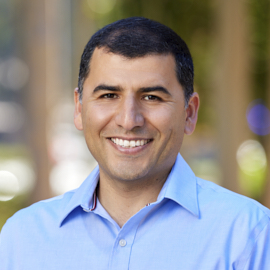
Stanford Graduate School of Business, USA
Keynote 2: Friday, November 6, 16:30–17:30
From Automating Expertise to Scaling Oversight #
Abstract: As AI agents capably complete tasks that used to require substantial human expertise, a new challenge emerges: determining when human oversight remains necessary. We begin with a clinical prediction problem where extracting meaningful information from unstructured medical notes requires extensive expert effort. We show how multi-agent language models can automate this process while achieving comparable predictive performance at a fraction of the human effort. We then turn to a broader question: when should autonomous agents act independently, and when should they seek human intervention? Building on game-theoretic and statistical frameworks, we explore how agents and overseers can coordinate their decisions. We also discuss how effective oversight can be maintained as AI capabilities continue to advance.
Biography: Mohsen Bayati is the Carl and Marilynn Thoma Professor of Operations, Information and Technology at the Stanford Graduate School of Business. He works on the mathematics of deploying AI in high-stakes settings: alignment and human oversight, experiment design under interference, and sequential decision-making. His research has appeared in Nature Medicine, PNAS, Management Science, Operations Research and NeurIPS, and has been recognized with the INFORMS Pierskalla and Applied Probability Society best paper awards and an NSF CAREER award.
Abeba Birhane #
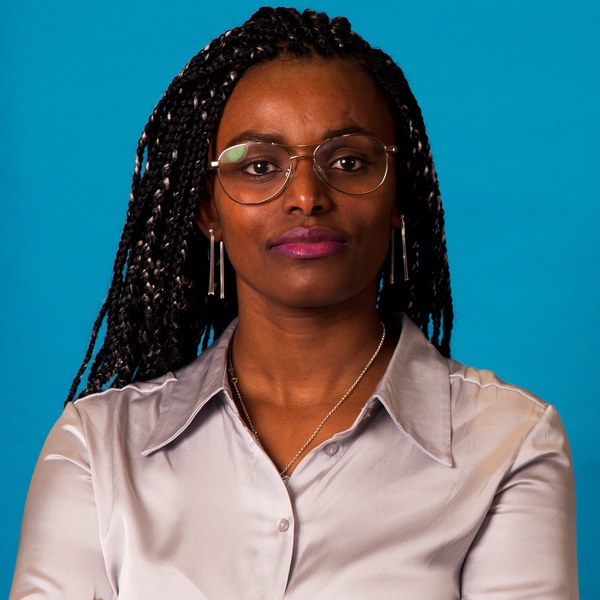
Trinity College Dublin, Ireland
Fireside chat: Saturday, November 7, 14:45–15:30, moderated by Miri Zilka
Biography: Dr Abeba Birhane founded and leads the TCD AI Accountability Lab (AIAL). She is an assistant professor of AI at the School of Computer Science and Statistics in Trinity College Dublin. Dr Birhane researches AI accountability with a particular focus on audits of AI systems — work for which she was featured in Wired UK and TIME on the TIME100 Most Influential People in AI list in 2023. Dr Birhane also served on the United Nations Secretary-General’s AI Advisory Body and currently serves at the AI Advisory Council in Ireland.
Causal Inference Panel #
Panel discussion: Friday, November 6, 14:00–15:00, moderated by Hannah Li
The panel Causal Inference for Social Good brings together two researchers working on causal methods and their use in consequential decisions.
Angela Zhou #
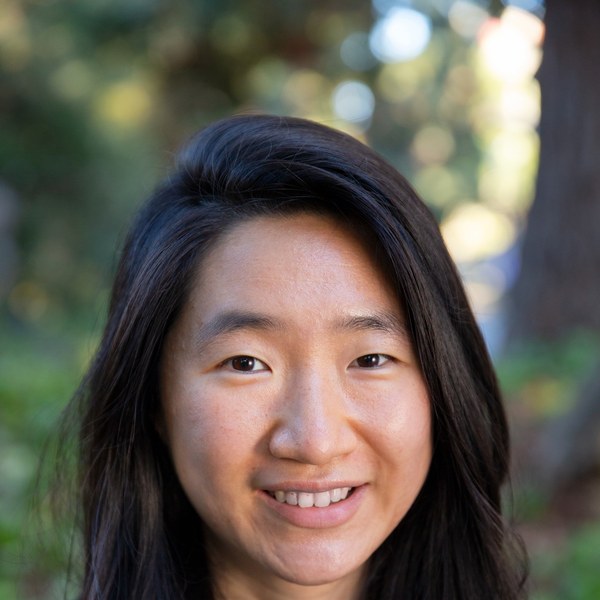
USC Marshall School of Business, USA
Biography: Angela Zhou is an assistant professor at USC Marshall Data Sciences and Operations, in the Operations group, and in the Department of Computer Science (by courtesy). She works on building theoretically solid and practically useful methodology across causal and sequential decisions. Her most recent work in AI and society focuses on social services provision and AI monitoring and evaluation.
Niki Kilbertus #
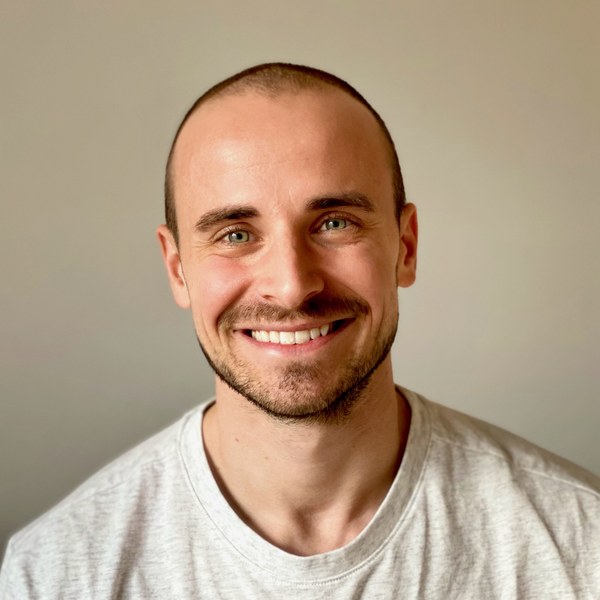
Technical University of Munich and Helmholtz Munich, Germany
Biography: Niki Kilbertus holds a joint appointment at the Technical University of Munich and Helmholtz Munich. His group is interested broadly in AI for science including mechanistic machine learning, causality, and dynamical systems modeling. Niki’s background is in mathematics and physics and he obtained a PhD in Machine Learning in a joint program of the University of Cambridge and the Max Planck Institute for Intelligent Systems, during which he interned at Google, Deepmind, and Amazon.